

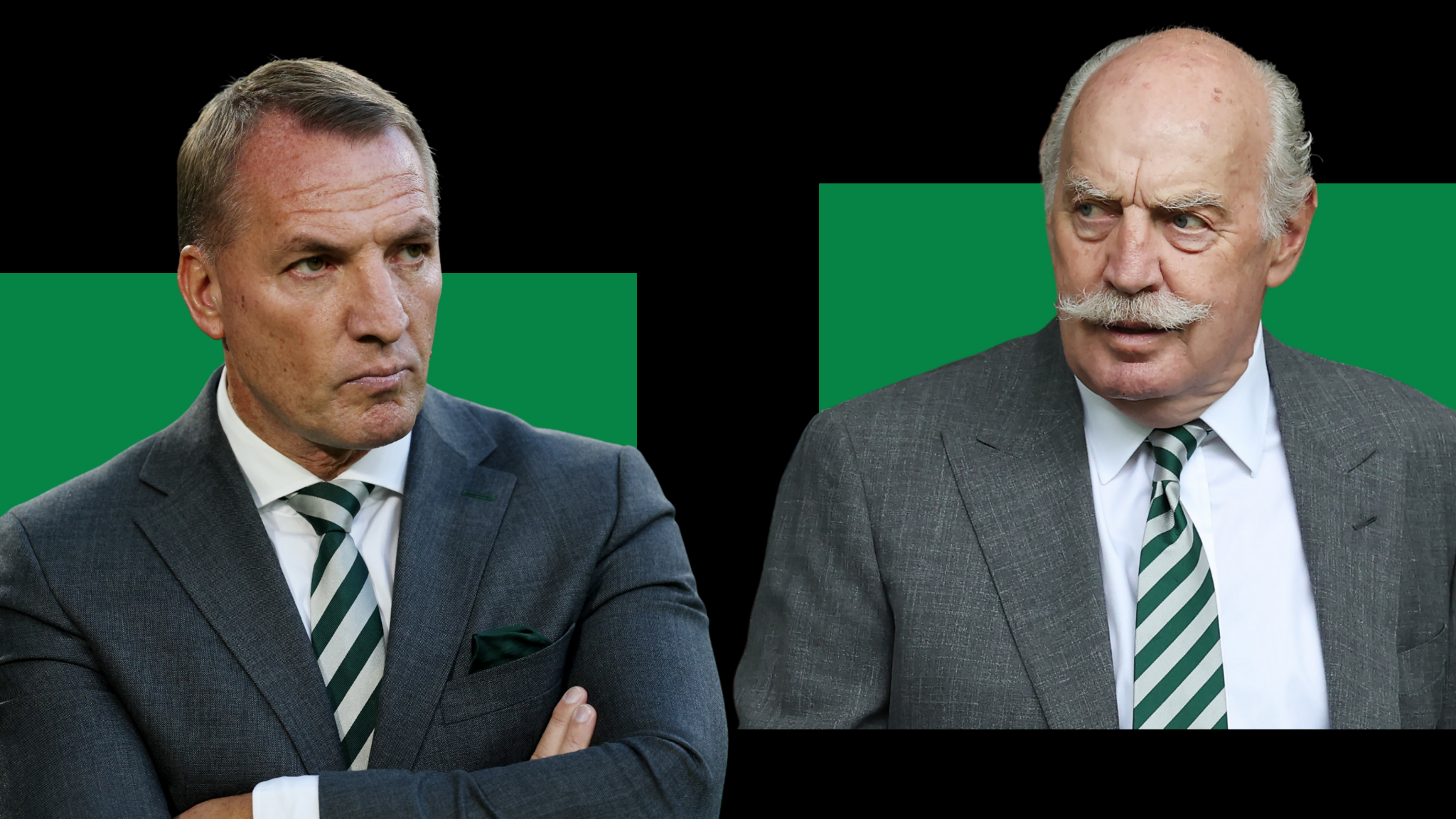
Merely a quarter of an hour after Celtic issued the news of Brendan Rodgers' surprising departure via a brief short statement, the bombshell arrived, courtesy of Dermot Desmond, with clear signs in apparent anger.
Through 551-words, key investor Dermot Desmond eviscerated his old chum.
The man he persuaded to come to the club when Rangers were gaining ground in that period and required being back in a box. And the man he again relied on after the previous manager departed to Tottenham in the recent offseason.
So intense was the severity of Desmond's critique, the jaw-dropping return of the former boss was practically an secondary note.
Twenty years after his exit from the club, and after a large part of his recent life was dedicated to an unending circuit of appearances and the playing of all his past successes at the team, Martin O'Neill is back in the dugout.
For now - and perhaps for a while. Considering things he has said recently, he has been eager to get another job. He'll see this one as the ultimate chance, a present from the Celtic Gods, a homecoming to the environment where he enjoyed such success and adulation.
Will he relinquish it readily? It seems unlikely. Celtic might well make a call to contact Postecoglou, but O'Neill will serve as a soothing presence for the time being.
'Full-blooded Effort at Reputation Destruction'
O'Neill's return - however strange as it is - can be set aside because the biggest shocking moment was the brutal way the shareholder described the former manager.
This constituted a forceful attempt at character assassination, a branding of Rodgers as deceitful, a perpetrator of falsehoods, a disseminator of falsehoods; divisive, deceptive and unjustifiable. "A single person's desire for self-interest at the expense of everyone else," stated he.
For somebody who values propriety and places great store in business being done with discretion, if not complete privacy, here was another illustration of how abnormal situations have become at Celtic.
Desmond, the club's most powerful presence, moves in the margins. The remote leader, the individual with the power to take all the major calls he pleases without having the responsibility of justifying them in any open setting.
He does not attend team AGMs, dispatching his offspring, Ross, in his place. He seldom, if ever, gives interviews about Celtic unless they're glowing in tone. And still, he's reluctant to speak out.
He has been known on an occasion or two to support the club with confidential messages to media organisations, but no statement is made in the open.
This is precisely how he's preferred it to remain. And that's exactly what he went against when going full thermonuclear on Rodgers on that day.
The directive from the team is that Rodgers resigned, but reviewing Desmond's invective, carefully, one must question why he allow it to reach such a critical point?
Assuming the manager is guilty of all of the things that Desmond is claiming he's guilty of, then it's fair to ask why was the coach not dismissed?
He has charged him of distorting information in public that did not tally with reality.
He claims his words "played a part to a hostile environment around the club and encouraged hostility towards members of the executive team and the directors. A portion of the criticism directed at them, and at their families, has been entirely unjustified and unacceptable."
What an extraordinary allegation, that is. Lawyers might be mobilising as we discuss.
His Ambition Clashed with Celtic's Model Again
Looking back to better days, they were close, Dermot and Brendan. Rodgers praised the shareholder at every turn, expressed gratitude to him every chance. Rodgers respected him and, really, to nobody else.
It was Desmond who took the criticism when his comeback occurred, post-Postecoglou.
This marked the most controversial appointment, the return of the returning hero for some supporters or, as other Celtic fans would have described it, the arrival of the unapologetic figure, who left them in the lurch for another club.
Desmond had his back. Gradually, Rodgers turned on the persuasion, achieved the wins and the trophies, and an uneasy truce with the supporters became a love-in once more.
It was inevitable - consistently - going to be a moment when Rodgers' goals clashed with Celtic's business model, however.
It happened in his initial tenure and it transpired again, with added intensity, recently. Rodgers spoke openly about the sluggish way the team went about their player acquisitions, the interminable delay for prospects to be secured, then not landed, as was frequently the situation as far as he was concerned.
Time and again he spoke about the need for what he called "agility" in the transfer window. The fans concurred with him.
Even when the organization splurged record amounts of money in a calendar year on the expensive Arne Engels, the £9m Adam Idah and the significant further acquisition - all of whom have performed well so far, with Idah since having departed - Rodgers demanded more and more and, often, he expressed this in openly.
He planted a bomb about a internal disunity inside the club and then walked away. Upon questioning about his comments at his next media briefing he would typically minimize it and almost contradict what he said.
Internal issues? No, no, everybody is aligned, he'd say. It looked like he was playing a risky strategy.
Earlier this year there was a report in a publication that purportedly came from a source associated with the organization. It claimed that Rodgers was damaging the team with his public outbursts and that his true aim was managing his exit strategy.
He didn't want to be present and he was arranging his exit, that was the tone of the article.
Supporters were angered. They now saw him as akin to a martyr who might be removed on his honor because his directors did not back his vision to achieve success.
This disclosure was poisonous, naturally, and it was meant to hurt him, which it did. He demanded for an investigation and for the guilty person to be dismissed. If there was a examination then we heard nothing further about it.
At that point it was plain the manager was shedding the support of the people in charge.
The frequent {gripes

